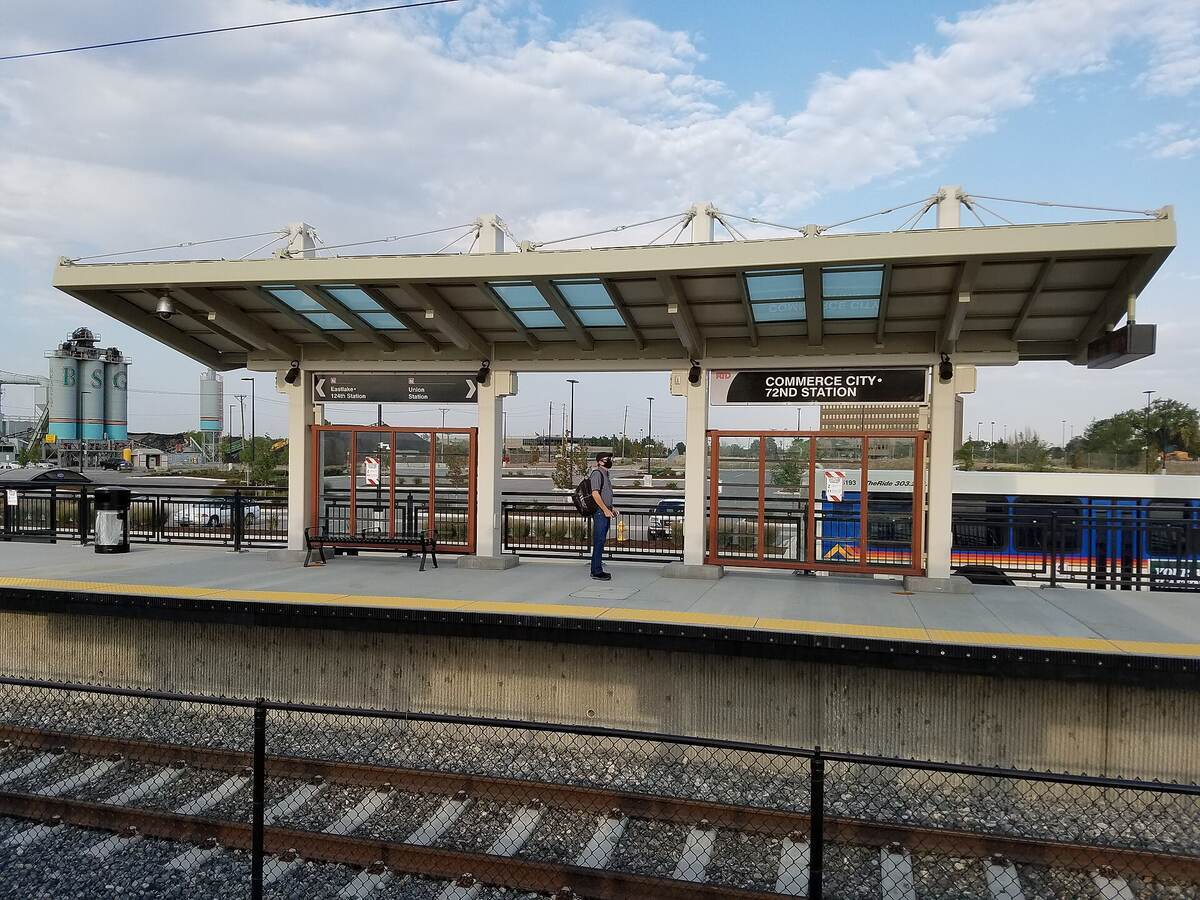
Commerce City addresses can be served by a special district rather than by a city-run wastewater program. The City's Water Service page directs customers to South Adams County Water and Sanitation District (SACWSD), whose official pages describe the Williams Monaco Wastewater Treatment Plant, the district collection system, and an industrial-pretreatment program that regulates commercial discharges. Verify the account and service-area map for a Derby, Rose Hill, Reunion, Fronterra Village, or 104th Avenue property before assuming that city limits identify its FOG regulator.
For a property in the SACWSD sewer service area, SACWSD is the relevant wastewater collection, treatment, and industrial-pretreatment authority; its program regulates commercial and industrial discharges and manages grease and sand/oil interceptors. Commerce City's municipal public-works and development functions remain separate, and Adams County food-safety inspection is not a replacement for the district's sewer rules. Ask SACWSD to confirm the parcel, especially where another district or connector may serve an address within Commerce City.
SACWSD's verified commercial maintenance rule
SACWSD's Industrial Pretreatment page says owners and users are responsible for proper maintenance and operation of grease and sand/oil interceptors and traps. Maintenance must be performed as needed and at least once every six months; full removal of contents is required and partial removal is not allowed. The page also requires maintenance records to be kept on site and accessible to District personnel for at least three years. These are SACWSD requirements for its sewer system, not a statewide rule to copy into an address served by another provider. Ask the District whether a particular kitchen is also an SIU or needs an industrial discharge permit.
The district treatment route
SACWSD identifies its Williams Monaco Wastewater Treatment Plant at 9702 Monaco Street in Henderson and describes a collection system of more than 300 miles, with pump stations where flows must be lifted. That regional infrastructure explains why a small restaurant's interceptor still matters: grease can restrict a private lateral or public main before it reaches treatment. SACWSD's pretreatment program covers businesses that discharge more than ordinary sanitary wastewater and lists large food processors and rendering plants among possible Significant Industrial Users. A typical restaurant should ask the District how it is classified rather than self-labeling as exempt.
Local access planning for growing corridors
Derby, Rose Hill, Reunion, Fronterra Village, and the 104th Avenue corridor include older commercial sites, newer mixed-use construction, and shared private drives. As planning advice, provide SACWSD and the pumper with the exact service address, district account, lid dimensions, truck approach, gate contacts, and any construction or sanitary-sewer facility-access permit information. Keep the truck clear of fire lanes and delivery traffic and confirm who controls a shared lot. This helps distinguish a provider boundary from a city boundary; it is not a claim that every Commerce City site has identical access rules.
Residential FOG, fryer oil, and interceptor contents
SACWSD's household FOG page says residents should scrape food into the trash, cool grease in a disposable container, use absorbent material for cooking oil, and never pour FOG down a sink or rely on hot water, a garbage disposal, or detergent additives. Its wastewater page separately tells restaurants and commercial buildings to have properly designed, installed, and maintained grease interceptors. Those statements do not establish that SACWSD accepts commercial pumpage or bulk yellow grease at a customer facility. Keep fryer oil separate from brown interceptor grease and require the hauler to identify the permitted destination and provide a signed record.
Neighborhoods and commercial areas
DerbyRose HillReunionFronterra Village104th Avenue corridorCommerce City core
Local service planning for Commerce City restaurants
Also Serving Nearby Cities
Our routes connect Commerce City with nearby communities, so restaurant operators can coordinate routine and urgent service across locations. For local requirements, review the Colorado regulations guide and confirm details with the applicable authority.
All prices are flat-rate. No hidden disposal fees. See the full pricing details before booking. Compliance documentation included. Recurring service discounts available — up to 15% off for monthly contracts. For large systems, see grease interceptor service.
Every Service Visit
What's Included With Every Commerce City Grease Trap Cleaning
🧹
Full Pump-Out & Scrape
We remove all accumulated FOG from the trap, scrape the baffles and interior walls, and flush the inlet/outlet lines. You get a fully clean system — not just a partial pump.
📋
Compliance Report
Every service generates a signed service record with the service date, technician, grease level, and findings. Keep it with your maintenance records for future inspections; our compliance guide explains the documentation context.
🔍
Condition Assessment
Our tech checks baffle condition, inlet/outlet integrity, and looks for cracks or damage while we're in there. If something's wrong, we tell you before it becomes an emergency — not after.
📅
Next Service Reminder
We set your next service reminder based on your trap size, kitchen volume, and menu type. You'll get a reminder before you're due — no guessing, no surprises. Our service interval calculator is a planning estimate, not a legal compliance calculation; confirm locally.
Common Questions
Grease Trap FAQs for Commerce City Restaurants
Is SACWSD automatically the sewer provider for every Commerce City address?
No city-limits shortcut is safe. Commerce City's Water Service page directs customers to SACWSD, but a parcel's account and service-area map control. Ask SACWSD to verify the exact address before applying its FOG rule.
What is SACWSD's minimum interceptor maintenance interval?
SACWSD says maintenance is as needed and at least once every six months. It also requires full removal, not partial removal, and on-site records accessible for at least three years.
Does six months mean every restaurant can wait six months?
No. SACWSD's wording says as needed and at least every six months. Loading, inspection findings, or an authority direction can require earlier work; ask the District for the site's schedule.
Can a restaurant leave some pumpage in the interceptor?
SACWSD's published pretreatment page says full removal of contents is required and partial removal is not allowed. Request a service ticket that identifies the work performed and retain it.
Does SACWSD accept clean fryer oil as part of a sewer pump-out?
Do not combine the streams or assume acceptance. SACWSD's household guidance and commercial interceptor guidance are separate; ask the District and use a documented outlet for yellow grease and a permitted destination for interceptor waste.
Who handles a Commerce City food inspection versus a sewer question?
A public-health agency may handle retail-food inspection, while SACWSD handles sewer pretreatment for its service area. A health permit does not establish interceptor sizing, frequency, or disposal approval.
Book Service in Commerce City
Schedule Your Commerce City Grease Trap Cleaning
Fill out the form and we'll call within 1 hour to confirm. Service within 48 hours guaranteed — same day often available.